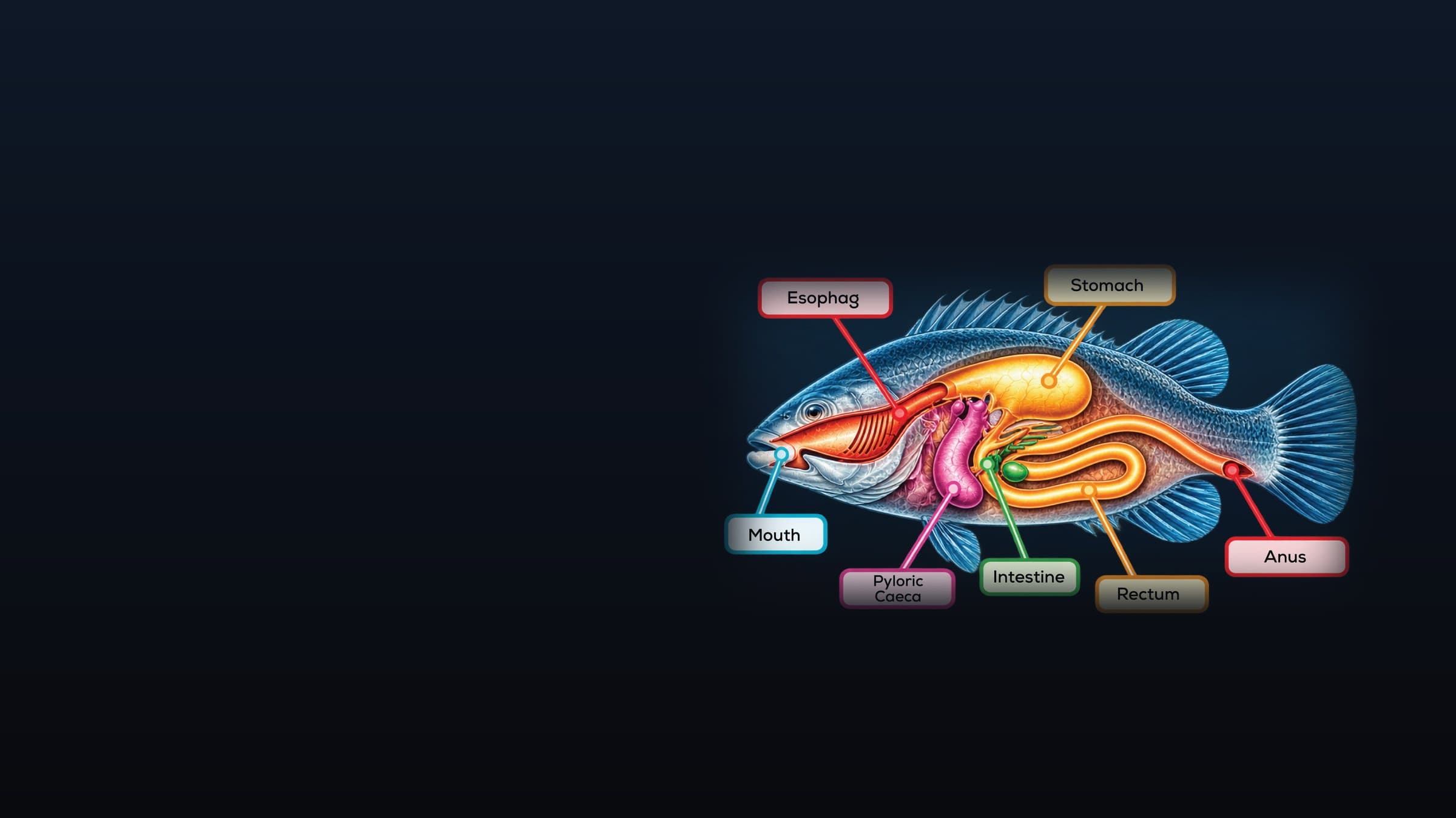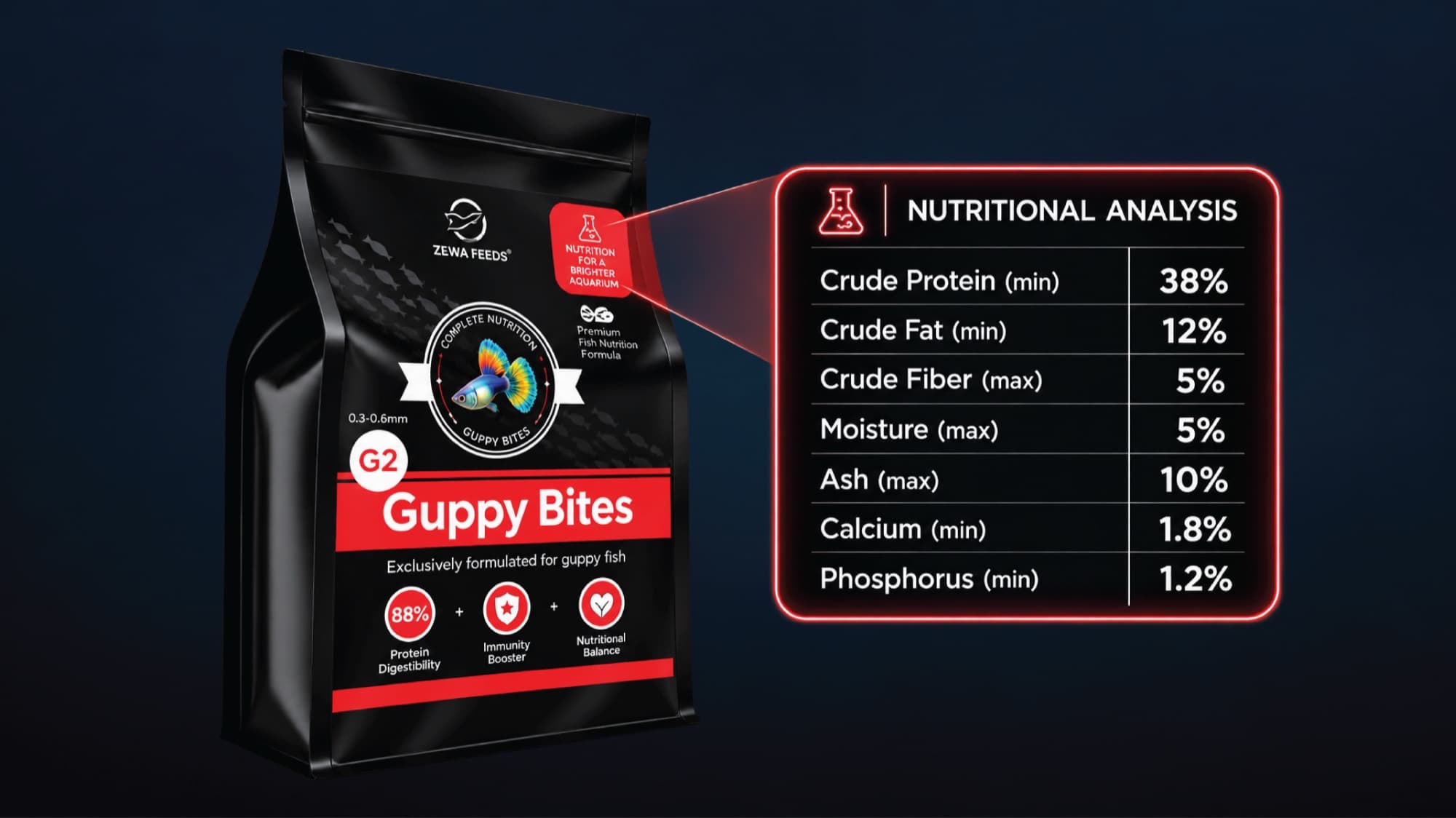

A feed can contain less protein and still grow fish better, provided the energy it no longer supplies as protein arrives as fat instead. This is the protein sparing effect, and it explains why two feeds with the same crude protein can differ in how much of it reaches tissue.
Earlier posts followed protein from the label through digestion and absorption. Absorbed amino acids then have two fates: built into tissue, or broken down for energy. Which dominates depends less on how much protein the feed contains than on whether it carries enough non-protein energy to cover the fish’s needs without touching that protein
Why fish burn protein when energy is short
Fish need energy for maintenance before any growth occurs. If the diet does not supply enough from fat and carbohydrate, the shortfall is met by deaminating amino acids: the nitrogen is excreted as ammonia and the carbon skeleton oxidised for fuel [3,4].
Protein used this way is bought at feed prices and burned as fuel. It does not appear as growth, and its nitrogen ends up in the water. Adequate non-protein energy lets the fish direct more dietary protein to growth — the protein sparing effect, and the reason it is pursued in formulation [1].
Why fat rather than carbohydrate
Both fat and carbohydrate supply non-protein energy, but not equally. Fat carries roughly twice the gross energy per gram, and it is the source most ornamental species are equipped to use: many carnivorous fish metabolise carbohydrate poorly, while fat is readily digested. Crude fat on a label is therefore not a filler figure — it does work that would otherwise fall to protein.
The protein-to-energy ratio
Neither figure means much in isolation; what matters is the ratio between them. A feed with adequate protein but insufficient energy diverts protein to fuel. One with ample energy but inadequate protein limits growth regardless. Formulating to that ratio rather than to a protein percentage is what lets a feed deliver growth at a lower declared protein level, with less nitrogen excreted per unit of gain.
Where sparing stops
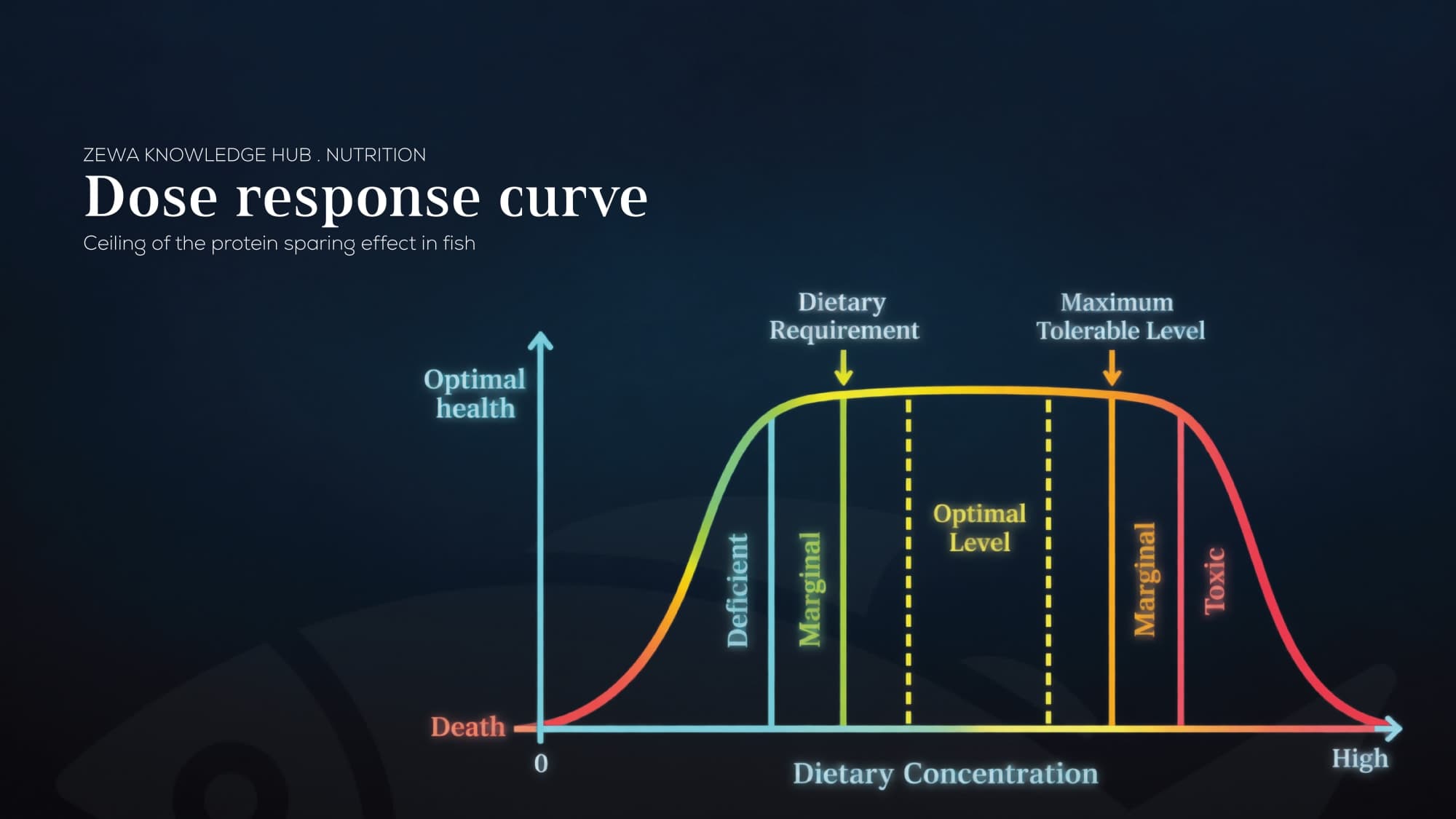
The effect has a ceiling, and passing it is counterproductive. A controlled trial on large common carp shows the shape. Six diets held protein at 300 g/kg while lipid rose from 30 to 180 g/kg; both ends of that range underperformed, with growth and feed efficiency peaking at 60 g/kg [2].
| Dietary lipid | 30g/kg | 60g/kg | 120g/kg | 180g |
|---|---|---|---|---|
| Protein efficiency ratio | 1.70 | 1.74 | 1.54 | 1.38 |
| Feed conversion ratio | 2.19 | 1.91 | 2.17 | 2.40 |
| Hepatopancreas lipid | 7.0% | 7.1% | 7.8% | 11.1% |
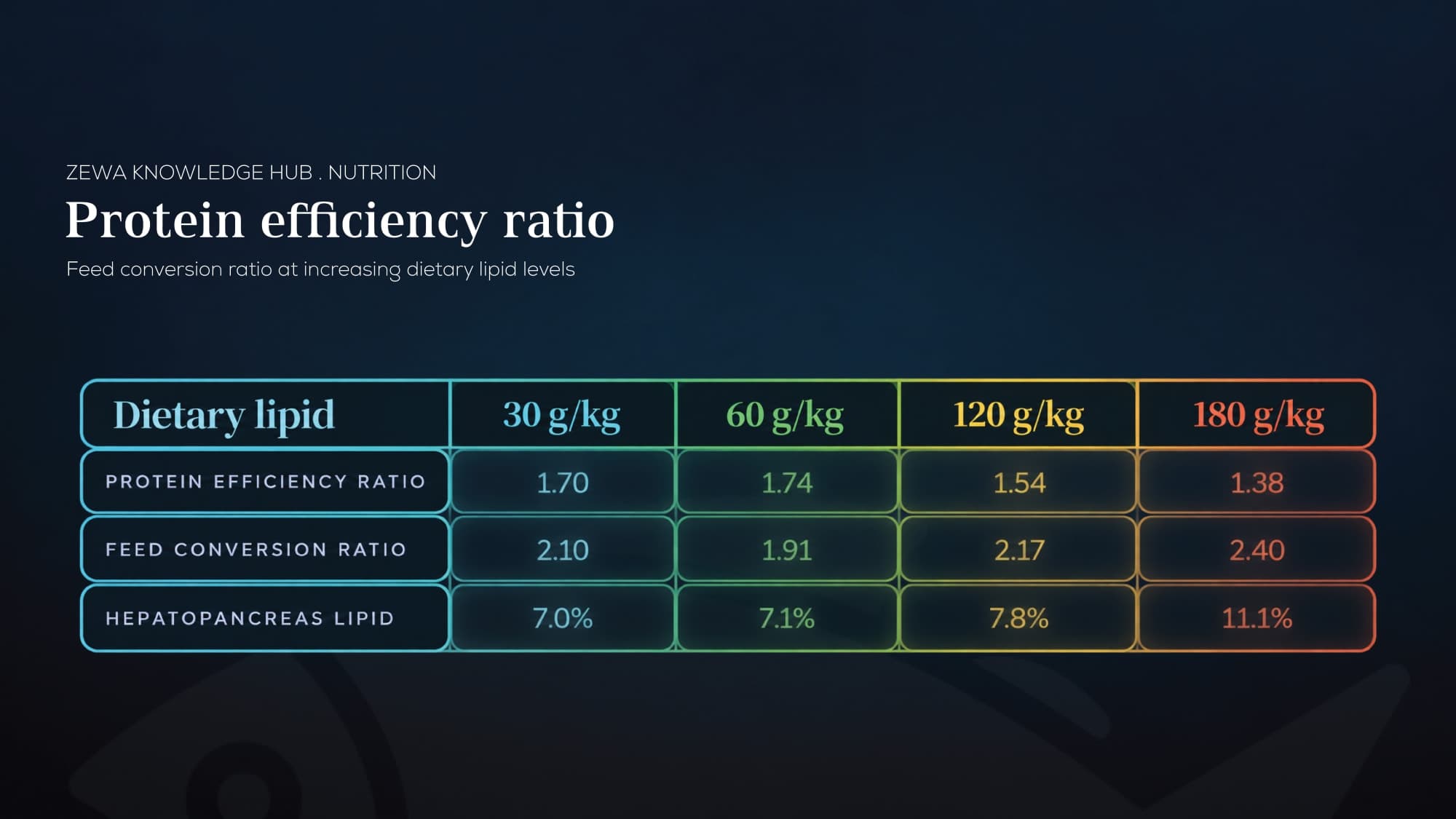
At 30 g/kg the fish converted feed less efficiently than at 60: too little non-protein energy leaves protein covering the shortfall, which is sparing in reverse. Above the optimum the fall is steeper — protein efficiency dropped by roughly a fifth between 60 and 180 g/kg, and lipid accumulated in the hepatopancreas instead of converting to growth [2].
Carp are cyprinids — the same family as goldfish and koi — so the pattern applies directly to pond and coldwater ornamentals.
Why the optimum differs between fish
There is no universal figure. Lipid requirement varies with species, body size, life stage and water temperature [2]. In the carp trial, larger fish needed less dietary lipid than juveniles — fast-growing juveniles direct more protein to deposition and need more non-protein energy for maintenance.
Some species spare strongly, others barely at all. It is answered species by species, not by a rule that more fat is better.
Quantity is only half of it: fat quality
Everything above concerns how much fat a feed carries. The quality of that fat matters just as much, and poor-quality fat is actively harmful rather than simply unhelpful.
Polyunsaturated fatty acids oxidise readily. Without antioxidant protection, the fatty acids that make dietary fat valuable turn damaging: oxidation generates free radicals, peroxides, aldehydes and ketones, which degrade vitamins and proteins in the feed and lower their biological value. Fish fed oxidised oil without supplementary vitamin E have shown reduced growth, poor feed efficiency, raised mortality, anaemia, fatty livers and muscle damage [5].
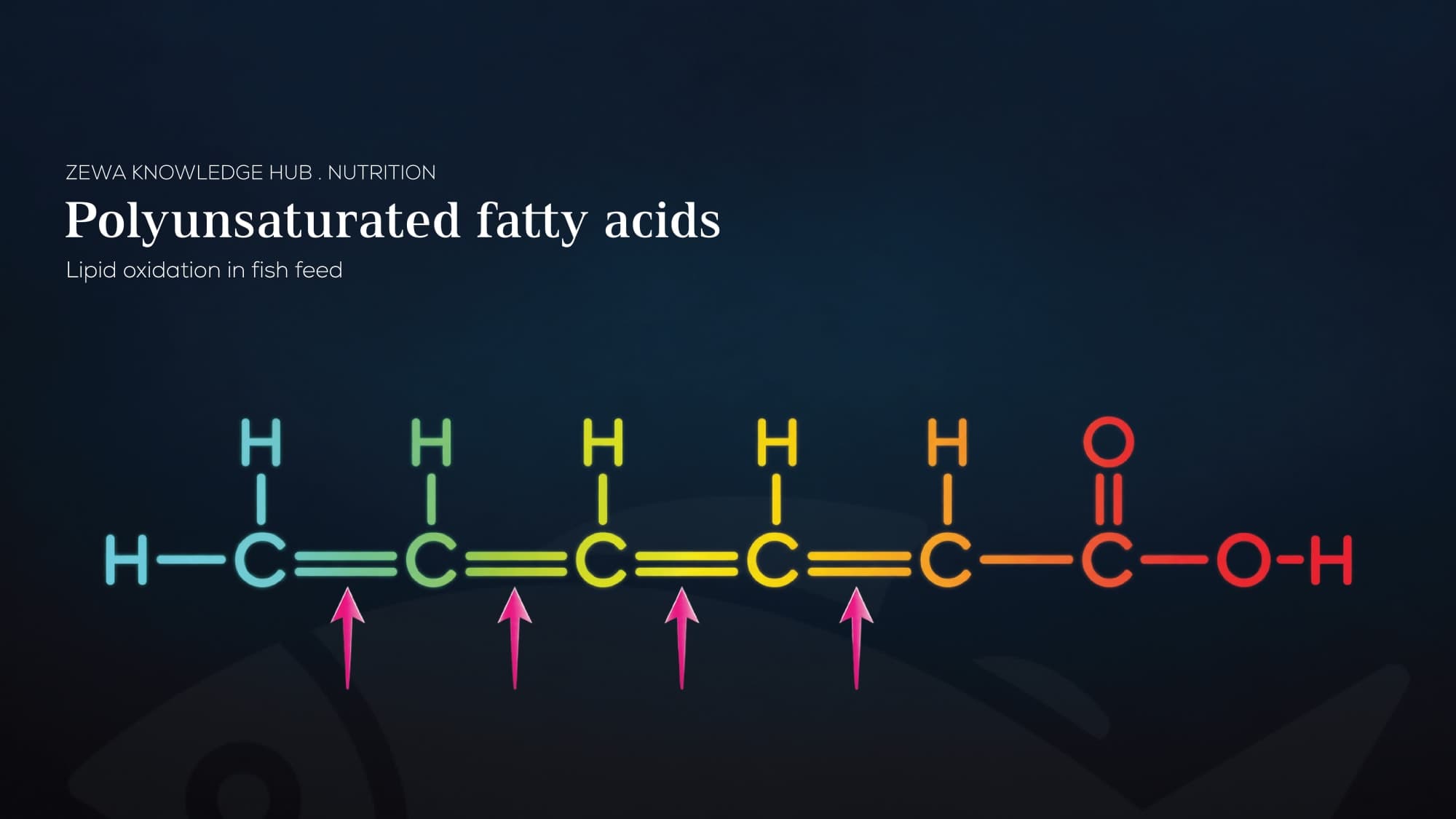
A crude fat figure says nothing about fatty acid profile, oxidative state or antioxidant protection. Two feeds declaring the same fat can differ in all three — a subject in its own right, and one we will come back to.
Where insect protein fits
Insect meal is relevant here because it is not a protein-only ingredient. Black soldier fly larvae carry a substantial natural lipid fraction alongside their protein, so a feed built on insect meal draws part of its non-protein energy from the same raw material rather than from added oil alone.
A 60-day trial at the Regional Agricultural Research Station, Kerala Agricultural University, compared a BSFL meal-based feed against two commercial diets built on shrimp meal and fish meal. In oscar, the insect meal diet produced significantly higher weight gain, specific growth rate and final length, with greater colour intensity. In guppy the growth advantage held, while colour differences were not significant. The findings were presented as abstract SFM-177 at MECOS 4, the Marine Biological Association of India symposium held at CMFRI Kochi in November 2025 [6].
It is the effect whereby adequate energy from fat or carbohydrate lets a fish use more of its dietary protein for growth instead of breaking it down for fuel, improving protein efficiency and reducing nitrogen excretion [1].
No. Above the species optimum, additional dietary fat reduces growth and feed efficiency and accumulates in the liver, other organs and muscle rather than converting to tissue [2]. Quality matters as much as quantity: oxidised or rancid fat causes worse effects than excess alone, including raised mortality and liver damage [5].
Crude fat indicates how much non-protein energy the feed supplies. If that figure is too low for the species, protein is diverted to meet the energy requirement instead of building tissue.
- 1
Li, P., Song, Z., Huang, L., Sun, Y., Sun, Y., Wang, X. & Li, L. (2023). Effects of Dietary Protein and Lipid Levels in Practical Formulation on Growth, Feed Utilization, Body Composition, and Serum Biochemical Parameters of Growing Rockfish Sebastes schlegeli. Aquaculture Nutrition, 2023:9970252. https://www.ncbi.nlm.nih.gov/pmc/articles/PMC10427231/
- 2
Fan, Z., Li, J., Zhang, Y., Wu, D., Zheng, X., Wang, C. & Wang, L. (2021). Excessive Dietary Lipid Affecting Growth Performance, Feed Utilization, Lipid Deposition, and Hepatopancreas Lipometabolism of Large-Sized Common Carp (Cyprinus carpio). Frontiers in Nutrition, 8:694426. https://doi.org/10.3389/fnut.2021.694426
- 3
Miles, R.D. & Chapman, F.A. The Concept of Ideal Protein in Formulation of Aquaculture Feeds. UF/IFAS Extension, FA144. https://ask.ifas.ufl.edu/publication/FA144
- 4
Tacon, A.G.J. The Nutrition and Feeding of Farmed Fish and Shrimp: A Training Manual — The Essential Nutrients. FAO. https://www.fao.org/4/ab470e/ab470e02.htm
- 5
Tacon, A.G.J. (1992). Nutritional Fish Pathology: Morphological Signs of Nutrient Deficiency and Toxicity in Farmed Fish. FAO Fisheries Technical Paper No. 330, Chapter 3: Disorders in Lipid Nutrition. FAO, Rome. https://www.fao.org/4/t0700e/T0700E03.htm
- 6
Andrews, S.R., Keerthana, P.K., Isaac, S.R. & Mulakkal, N. Comparative evaluation of black soldier fly larvae-based sustainable feed in oscar and guppy. Abstract SFM-177, Theme 2: Sustainable Fisheries and Mariculture. In: Book of Abstracts, MECOS 4 — Marine Ecosystems Challenges and Opportunities, Marine Biological Association of India, CMFRI, Kochi, 4–6 November 2025, p. 333. https://mbai.org.in/uploads/userfiles/Book%20of%20Abstract%20-Final%20(16-01-2026).pdf