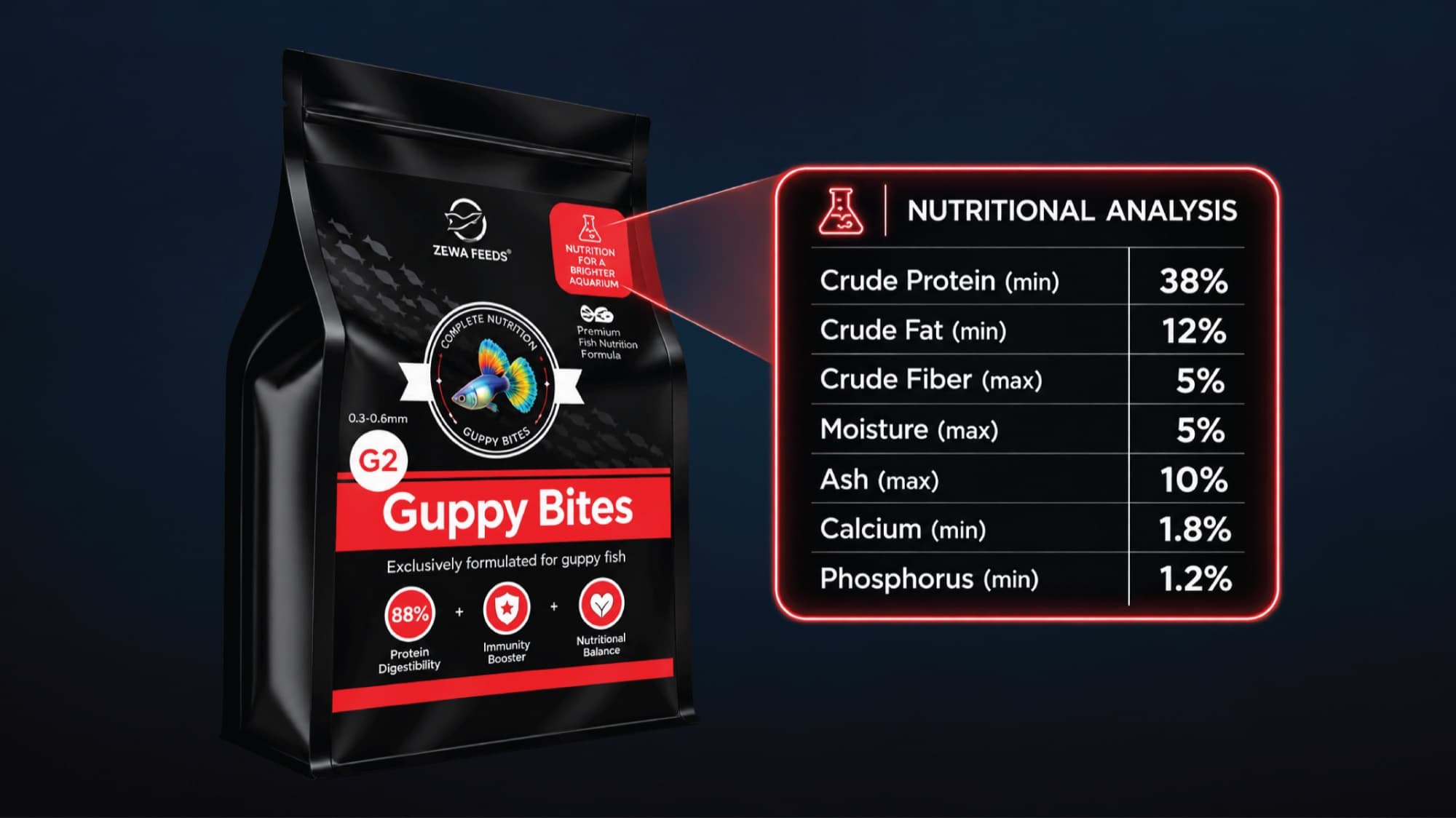
The protein declared on a feed label and the protein a fish builds tissue from are two different quantities. The gap between them is created in the gut, in the hours after feeding, by a sequence of enzymes and membrane transporters.
Our previous article established that crude protein is a nitrogen estimate and says nothing about what the fish can use. This article follows the protein through the animal: how it is broken down, how protein absorption in fish happens at the gut wall, what becomes of the amino acids that arrive, and how that shows up in the two numbers breeders track, feed conversion ratio and specific growth rate.
Digestion: breaking protein into pieces small enough to cross a membrane
Protein cannot be absorbed as protein. It must be dismantled into free amino acids and very short peptide chains before anything crosses the intestinal wall, in three stages.
Protein that resists the enzymes, or that moves through the gut faster than they can work on it, leaves as waste regardless of what the label declared.
Why the same feed is digested differently by different species
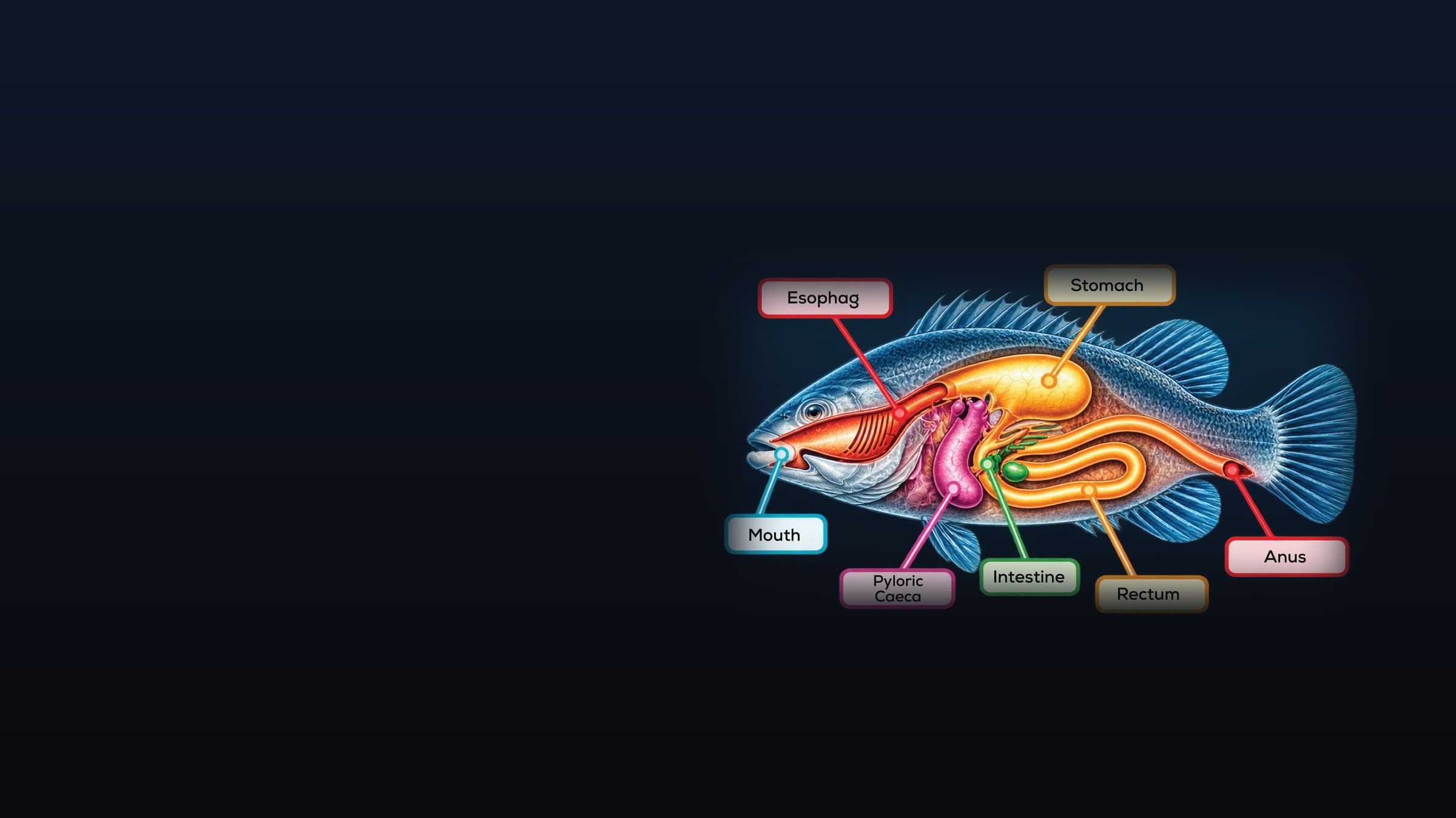
Not every ornamental fish has a stomach. Goldfish and other cyprinids are agastric, meaning the oesophagus connects more or less directly to the intestine. These species produce no pepsin and no gastric acid, so intestinal alkaline proteases carry out the primary work of protein digestion instead [1].
The consequences are practical. Gastric species can store a meal and release it gradually, giving enzymes time to act, and many also have pyloric caeca, blind tubes off the anterior intestine that increase absorptive surface area [2]. Agastric species have neither the acid stage nor the storage capacity, and often a shorter gut. They handle frequent small meals of highly digestible feed better than infrequent large ones, which is why a goldfish and a betta should not be fed the same way.
How protein absorption in fish works at the gut wall
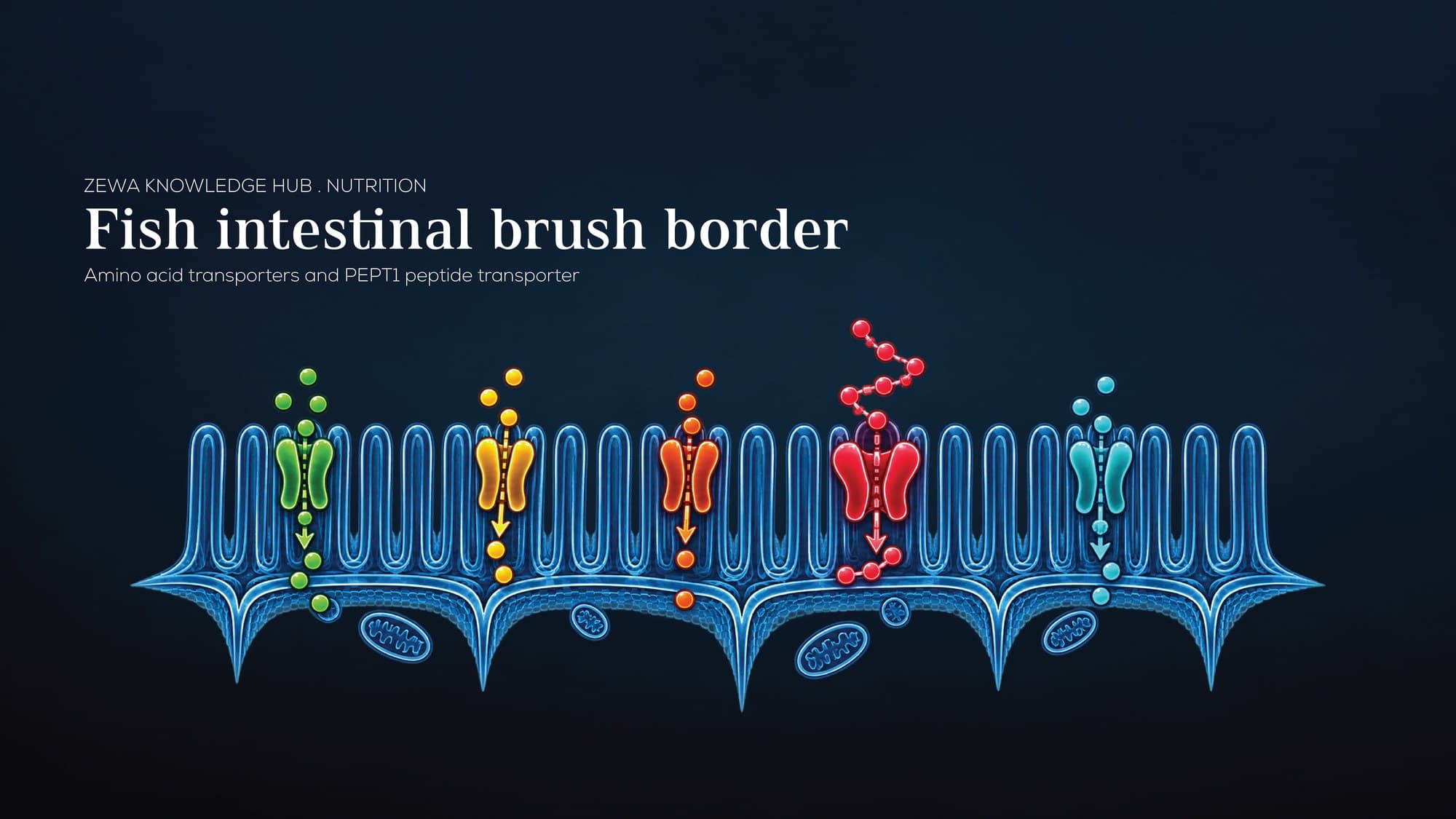
Absorption is not passive leakage. Free amino acids are carried across the intestinal membrane by a range of amino acid transporters, each with its own substrate preference. Di- and tripeptides take a separate route through a single transporter, PEPT1, which moves them into the cell where cytosolic peptidases release the individual amino acids [3].
This second route matters more than its share of the traffic suggests. In teleost fish, PEPT1 supplies a meaningful proportion of the amino acids that sustain net muscle protein synthesis, and therefore body growth, operating as part of the gut’s response to food availability [3]. Absorption capacity, in other words, is a growth variable in its own right, not just a plumbing detail.
From absorbed amino acids to new tissue
Protein absorption in fish ends at the point where amino acids enter circulation and are reassembled into the fish’s own proteins: muscle, enzymes, immune proteins, the structural proteins of fin and skin. Amino acid balance becomes decisive here, because synthesis requires the right amino acids present together and stops at whichever one runs short.
What is absorbed but not used for synthesis is not stored in any meaningful quantity. It is deaminated, the nitrogen excreted as ammonia and the carbon skeleton burned for energy [4,5]. Every gram taking that path has been paid for in feed and ends up in the water as nitrogenous waste.
Where this shows up: FCR and SGR
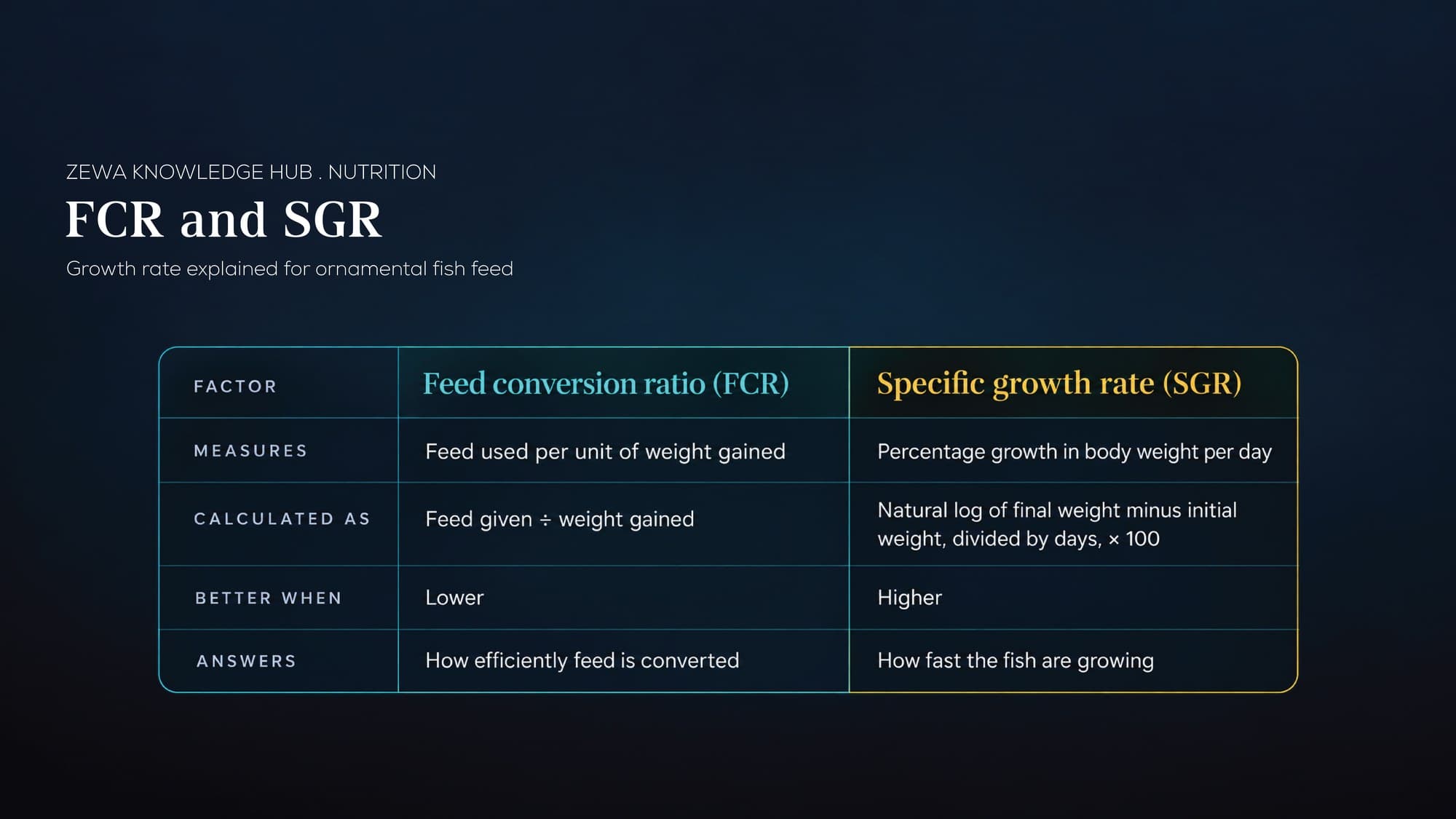
Two standard metrics make absorption visible without measuring it directly.
| Feed conversion ratio (FCR) | Specific growth rate (SGR) | |
|---|---|---|
| Measures | Feed used per unit of weight gained | Percentage growth in body weight per day |
| Calculated as | Feed given ÷ weight gained | Natural log of final weight minus initial weight, divided by days, × 100 |
| Better when | Lower | Higher |
| Answers | How efficiently feed is converted | How fast the fish are growing |
The two answer different questions and should be read together. A feed can produce fast growth while converting inefficiently, if the fish are simply eating a great deal of it, and can convert well at a low feeding rate while growth stays modest. Digestibility tends to move both, because better absorption leaves more of each gram available for synthesis.
Digestibility itself is measured as an apparent digestibility coefficient: the proportion of a nutrient that does not reappear in the faeces, determined by including an inert marker in the feed and comparing its concentration in feed and faeces. Zewa feeds are tested through an NABL accredited laboratory, and the insect protein base has been assessed at 88% pepsin digestibility.
Frequently asked questions
Declared protein is the total estimated in the feed by laboratory analysis. Absorbed protein is the fraction that survives digestion and crosses the intestinal wall into circulation. Only the second contributes to growth.
Enzymes reduce dietary protein to free amino acids and short peptides. Free amino acids cross the intestinal membrane through amino acid transporters; di- and tripeptides cross through PEPT1 and are broken down inside the cell [3].
No. Species with a stomach begin protein digestion with pepsin at acidic pH. Agastric species such as goldfish have no stomach and rely on intestinal alkaline proteases instead [1].
The takeaway
Between the label and the fish sits a digestive sequence that decides how much of a declared percentage is realised. Protein absorption in fish is the step that converts one figure into the other. Enzyme access, gut anatomy, transport capacity and amino acid balance each place a limit on it. What clears all four shows up as growth; the rest is excreted.
References
- 1
FAO. Digestion in Teleost Fishes, Chapter 1. Fish Feed Technology, FAO Corporate Document Repository. View source
- 2
Le, H.T.M.D., Shao, X., Krogdahl, Å., Kortner, T.M., Lein, I., Kousoulaki, K., Lie, K.K. & Sæle, Ø. (2019). Intestinal Function of the Stomachless Fish, Ballan Wrasse (Labrus bergylta). Frontiers in Marine Science, 6:140. View source
- 3
Verri, T., Terova, G., Dabrowski, K. & Saroglia, M. (2011). Peptide transport and animal growth: the fish paradigm. Biology Letters, 7(4):597–600. View source
- 4
Miles, R.D. & Chapman, F.A. The Concept of Ideal Protein in Formulation of Aquaculture Feeds. UF/IFAS Extension, FA144. View source
- 5
Tacon, A.G.J. The Nutrition and Feeding of Farmed Fish and Shrimp: A Training Manual — The Essential Nutrients. FAO. View source