
Feed accounts for 50–70% of total aquaculture production costs, and protein is the single most expensive component in any formulation. Formulators today can choose from a wider range of protein sources than at any point in the industry's history — fish meal, soybean meal, plant protein blends and insect protein each bring genuinely different strengths. This guide compares all four on nutrition, digestibility, cost and sustainability.
What is fish meal, and where is it used?
Fish meal is produced by cooking, pressing and drying whole fish or fish by-products. It delivers 60–72% crude protein with a complete essential amino acid profile rich in lysine and methionine. Its omega-3 content (EPA and DHA) supports neural and immune function, and it carries a long track record in carnivorous aquafeed and early-life-stage nutrition for shrimp, salmon and marine finfish.
Why soybean meal is used so widely
Soybean meal contains 44–48% crude protein and accounts for more than 70% of global protein meal consumption in animal feed. Consistent worldwide supply and stable pricing make it a practical backbone for poultry, swine and herbivorous aquafeed formulations.
Protein digestibility in fish ranges from roughly 73–87% depending on processing. In carnivorous species, soy is typically used as part of a multi-source blend rather than a sole protein, because methionine supplementation is usually needed to meet those species' amino acid demands.
What role does plant protein play?
Beyond soy, formulators draw on pea protein concentrate (50–90% crude protein), canola meal (around 36–38%), sunflower meal (28–40%) and spirulina (55–70%). These are increasingly blended to build more complete amino acid profiles.
Plant blends suit livestock and herbivorous aquaculture well, and they let formulators diversify supply across several crops and growing regions — a meaningful hedge when any single commodity market tightens.
What makes insect protein a strong alternative?
Black soldier fly larvae (BSF, Hermetia illucens) meal delivers 40–55% crude protein depending on processing, with an amino acid profile that matches or exceeds soybean meal across key amino acids. What sets it apart is the combination of high digestibility, functional bioactives and sustainability in a single ingredient.
Higher digestibility means more nutrition absorbed per feeding, less metabolic waste in the water, and better feed conversion — healthier animals and cleaner tanks from the same input.
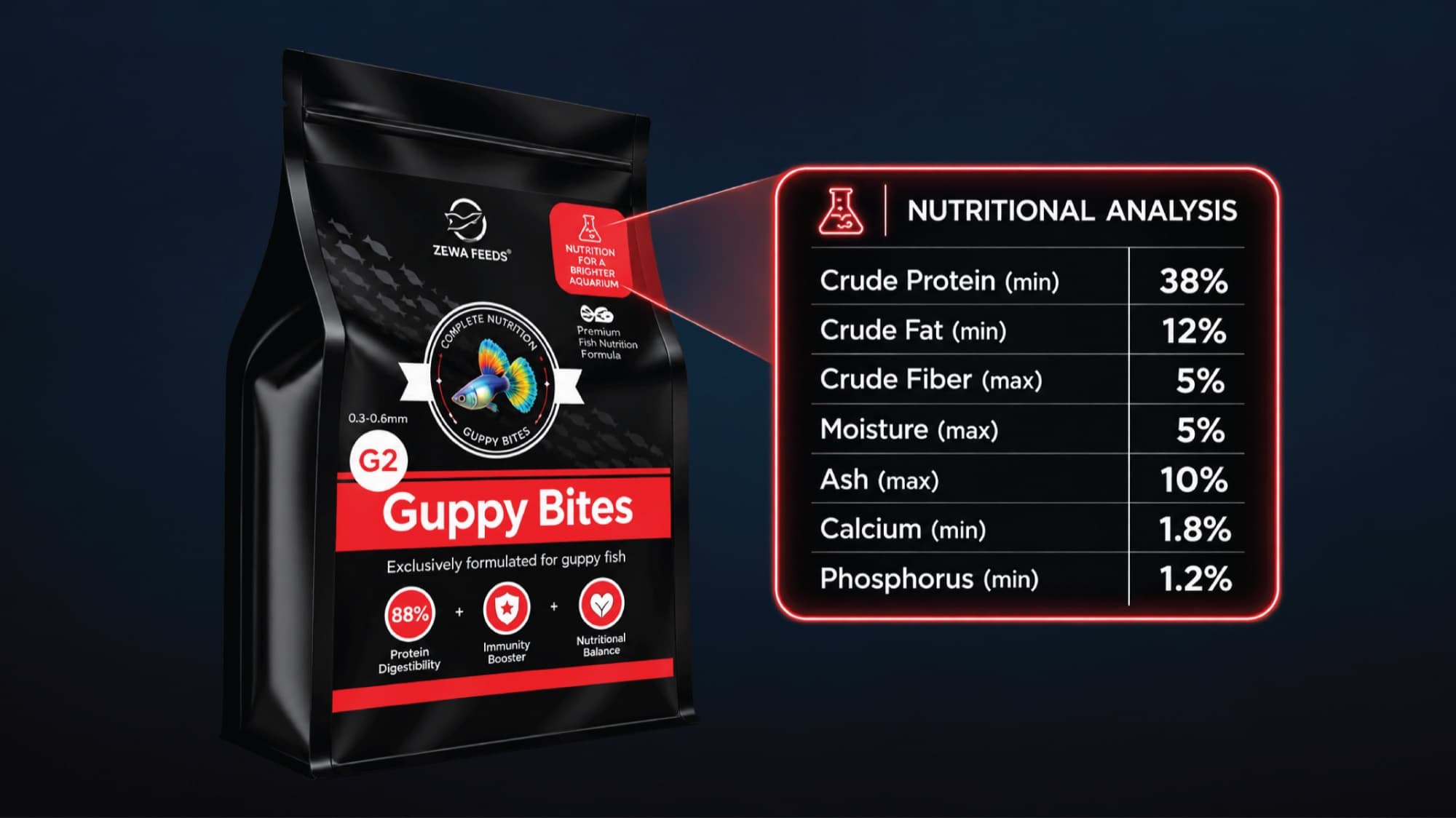
BSF-based feeds achieve 88% pepsin digestibility, well above the 70–75% typical of conventional soy-based feeds. That gap compounds across a production cycle: every percentage point of protein that is absorbed rather than excreted is protein you do not have to buy twice.
Regulation has kept pace with the science. The EU authorised insect protein for aquafeed in 2017 and extended approval to poultry and swine in 2021. Production is scaling quickly and cost per tonne is falling as the global BSF farming industry matures.
Head-to-head comparison
| Factor | Fish meal | Soybean meal | Plant protein | BSF insect meal |
|---|---|---|---|---|
| Crude protein | 60–72% | 44–48% | 28–90% (varies) | 40–55% |
| Digestibility | High | 73–87% | Variable | 88% (pepsin) |
| Functional bioactives | Omega-3s | Limited | Limited | Lauric acid + chitin |
| Cost trend | High | Low, stable | Low–moderate | Moderate, falling |
| Supply outlook | Quota-governed | Abundant | Abundant | Scaling rapidly |
| Sustainability | Moderate | Moderate | Favourable | Highly favourable |
Choosing for your operation
Fish meal
- Highest crude protein (60–72%)
- Complete amino acid profile
- Native EPA/DHA omega-3s
- Proven in early-life-stage feeds
- Quota-governed supply
- Highest and most volatile cost
- Flat global production
Soybean meal
- Stable, predictable pricing
- Abundant global supply
- Well understood by formulators
- Methionine supplementation often needed
- Anti-nutritional factors
- Rarely a sole protein for carnivores
Plant blends
- Diversifies supply across crops
- Low to moderate cost
- Good fit for herbivorous species
- Variable digestibility
- Needs careful blending for amino acid balance
- Limited functional compounds
BSF insect meal
- 88% pepsin digestibility
- Lauric acid and chitin included
- Lowest environmental footprint
- Cost declining as production scales
- Moderate crude protein (40–55%)
- Newer supply chain than commodity proteins
Frequently asked questions
It depends on the species, life stage and what you are optimising for. Each source has distinct strengths. For sustainability, digestibility and functional health benefits combined, BSF insect protein offers the strongest all-round profile. Fish meal provides excellent amino acid density. Soybean meal offers cost stability and scale.
Yes, and this is increasingly the industry standard. Modern formulations blend multiple sources to optimise amino acid balance, cost efficiency and sustainability. Insect protein, fish meal, soy and plant proteins complement each other effectively when ratios are tailored to species and life stage.
BSF insect protein offers the lowest environmental footprint — minimal land and water use, low emissions, and organic waste conversion. It is also the only major alternative that adds functional bioactive compounds (lauric acid, chitin) alongside protein. Plant blends and fermented soy are also viable sustainable options.
The bottom line
The future of aquafeed protein is not about choosing one source over another. It is about selecting the right combination for your species, life stage and market goals. Fish meal, soybean meal and plant protein each play a valuable role.
Insect protein adds something none of the others can: high digestibility at 88% pepsin, natural immune-support compounds, and the strongest sustainability credentials of any major feed protein — with costs declining as production scales. For formulators building toward 2030, it is the fish meal alternative with the most strategic upside.
References
- 1
FAO (2022). The State of World Fisheries and Aquaculture 2022. Rome: Food and Agriculture Organization of the United Nations. View source
- 2
Ma, S., Wang, H., Dou, Y., Liang, X., Zheng, Y. & Wu, X. (2022). Anti-nutritional factors and protein dispersibility index as principal quality indicators for soybean meal in diet of Nile tilapia. Animals, 12(14), 1831. View source
- 3
Caimi, C., Biasato, I., Chemello, G., Oddon, S.B., Lussiana, C., Malfatto, V.M. et al. (2021). Dietary inclusion of a partially defatted black soldier fly larva meal in low fishmeal-based diets for rainbow trout. Journal of Animal Science and Biotechnology, 12, 50. View source
- 4
Lauric acid from the black soldier fly (Hermetia illucens) and its potential applications (2023). Sustainability, 15(13), 10383. View source
- 5
Chitinase and insect meal in aquaculture nutrition: a comprehensive overview of the latest achievements (2023). Fishes, 8(12), 607. View source