
The gut microbiome of ornamental fish is one of the least explored frontiers in aquaculture nutrition. A growing body of research shows that the composition of beneficial bacteria in a fish's digestive tract directly influences immunity, nutrient absorption, colour expression, and stress tolerance. What a fish eats determines which microbial populations thrive in its gut, and that makes feed selection one of the most consequential decisions a hobbyist or breeder can make.
What is insect chitin, and why does it matter for fish nutrition?
Chitin is the structural polysaccharide that forms the exoskeleton of insects. In Black Soldier Fly larvae (BSFL), chitin content ranges from approximately 5% to 12% by dry weight, depending on the larval stage and processing method. When consumed by fish, chitin functions as a prebiotic fibre. It is not fully digested in the way proteins or fats are. Instead, it selectively promotes the growth of beneficial bacterial populations in the hindgut.
Research on Atlantic salmon has shown that dietary chitin at moderate inclusion levels increases beneficial bacteria such as Lactobacillus, Carnobacterium, and Bacillus, while reducing the relative abundance of potentially harmful genera like Vibrio and Aeromonas. Similar microbiome shifts have been observed in rainbow trout, tilapia, and Japanese seabass fed insect-based diets. Importantly, these effects are dose-dependent and species-specific. Some fish species digest chitin more efficiently than others, which means the results vary with formulation.
Unlike isolated synthetic prebiotics such as FOS (fructooligosaccharides), which deliver a single compound in a carrier matrix, chitin in insect meal arrives alongside lauric acid (a medium-chain fatty acid with natural antimicrobial properties), a complete amino acid profile, and essential fatty acids. This co-delivery of prebiotic fibre with macro nutrition is what makes insect-based feeds nutritionally distinctive. For a source-by-source breakdown, see Fish Meal vs Soy vs Insect Protein.
How does chitin support the fish gut differently from synthetic supplements?
Most commercially available gut supplements isolate a single prebiotic compound. The limitation of this approach is that it bypasses the matrix effect: the way nutrients interact synergistically within a whole food source. Insect chitin is not an isolated compound. It exists within a protein matrix that includes lauric acid, branched-chain amino acids, and bioactive lipids. Published research suggests this matrix stimulates a broader, more diverse microbiome response compared to single-compound delivery, though direct head-to-head studies comparing chitin to synthetic prebiotics in ornamental fish are still limited.
What are the practical benefits for hobbyists and breeders?
For betta keepers, the downstream effects of a healthier gut microbiome are visible over time: improved colour vibrancy (emerging research links gut microbiota composition to carotenoid assimilation in fish skin), reduced stress responses during transport, and stronger overall condition. For breeding operations, the modulation of pathogenic bacteria such as Aeromonas species through insect-based diets can contribute to improved fry survival in the critical first 72 hours post-hatch, though outcomes depend on species, water quality, and overall husbandry.
The practical takeaway is straightforward: choose a feed that lists insect meal, specifically Black Soldier Fly larvae (BSFL), as a primary protein ingredient. Look for feeds where the insect protein source has verified digestibility data, since digestibility determines how much of the nutrition actually reaches the fish rather than passing through as waste.
Why does Zewa use BSF insect protein as the foundation of its feeds?
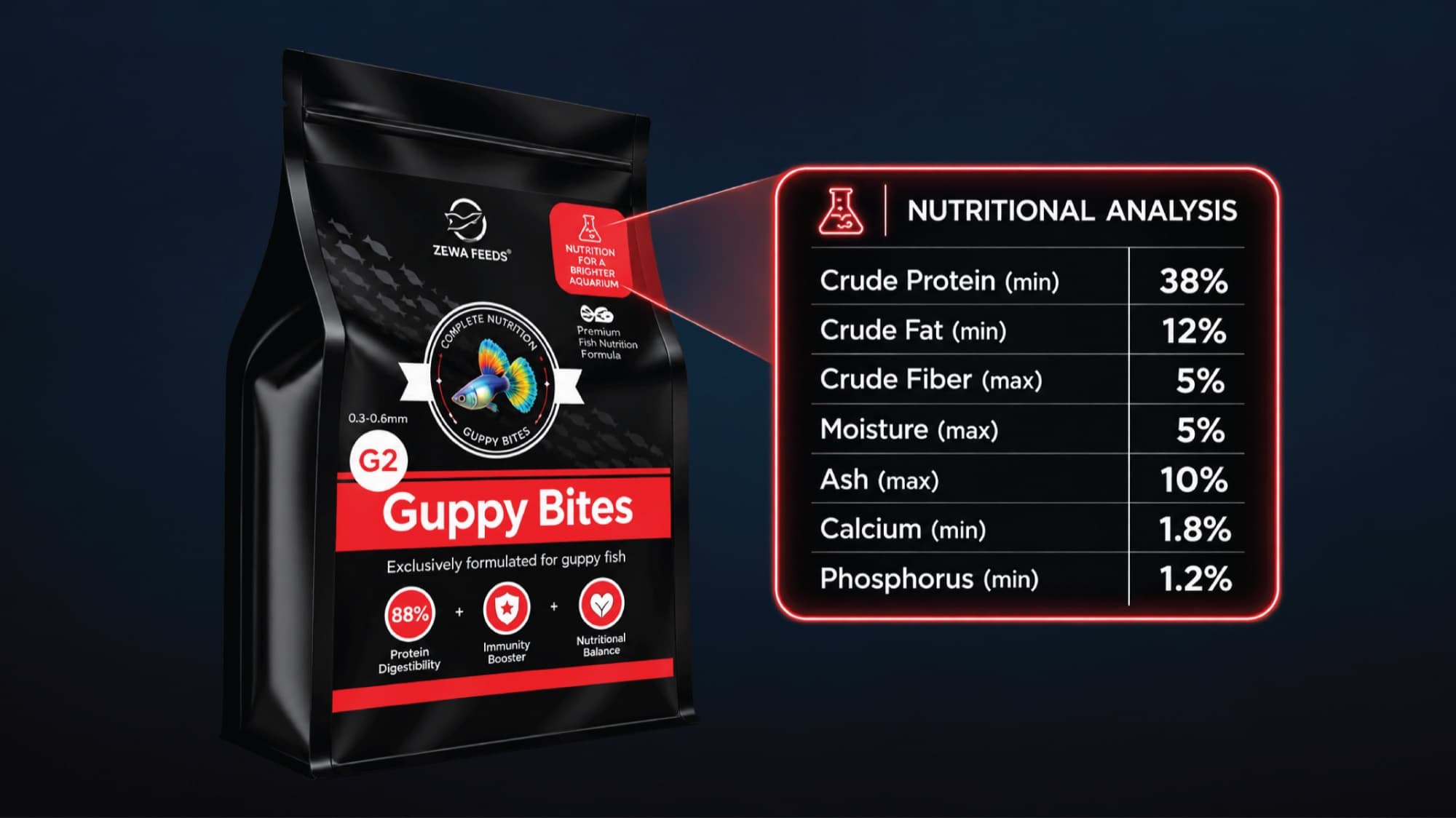
Zewa Feeds is a Kerala-based insect protein aquafeed company that formulates Black Soldier Fly based ornamental fish feeds with ICAR-supported research. Every Zewa formulation, from Betta Bites at 46% protein to Hatch'E hatchery feed at 50% protein, is built on an insect meal base that delivers verified 88% pepsin digestibility (tested at a NABL-accredited laboratory). This means more nutrition absorbed per feeding, less ammonia waste in the tank, and a natural source of chitin working as a prebiotic with every meal. No synthetic gut supplements needed.
Chitin is a natural component of insect-based feeds and is generally well tolerated at the inclusion levels found in commercial ornamental fish food. However, chitin digestibility varies between species. Carnivorous and omnivorous species that naturally consume insects tend to process chitin more effectively than strict herbivores.
Insect chitin acts as a prebiotic, meaning it feeds beneficial bacteria already present in the fish gut. It does not introduce new bacteria the way a probiotic supplement does. In a well-formulated insect protein feed, the prebiotic effect of chitin supports gut health as part of daily nutrition rather than requiring a separate supplement.
Published research reports BSF larvae chitin content ranging from approximately 5% to 12% by dry weight depending on life stage and processing. Effective prebiotic benefits have been observed at moderate dietary inclusion levels. Rather than targeting a specific chitin percentage, look for feeds where insect meal is listed as a primary ingredient.